
"arabica pruning"
500 article(s) found
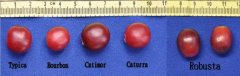
Coffee cultivation techniques how to cultivate coffee seeds pruning and fertilization of coffee
Professional coffee knowledge exchange more coffee bean information please follow the coffee workshop (Wechat official account cafe_style) A coffee tree bears fruit several times a year. Coffee is a perennial evergreen shrub of Rubiaceae. At present, there are two kinds of coffee with economic value: Coffea arabica (Arabica) and Coffea canephora (Robusta).

Cultivation Techniques of Coffea arabica in Yunnan
Control methods: ① strengthen management, reasonable pruning, appropriate shade. (2) Artificial killing of adults and larvae, timely cutting down and burning of damaged branches. 2. Coffee leopard wood moth. It is widely distributed and is one of the common coffee pests, which can harm a variety of economic crops. The larvae overwinter in the branches, and the larvae often eat upward in the branches, forming a tunnel of 30~60 cm. Prevention methods: ①

How long does the Coffee Tree produce beans-- introduction to the planting method of how long the Coffee Tree can live
How long can coffee trees bear beans? how long can coffee trees live? introduction to planting methods people on the plantation will fertilize and prune the land after harvest to prepare for the harvest of coffee beans in the coming year. After the coffee beans are taken out of the fruit, the rest of the flesh is used as fertilizer. In order to make good coffee of stable and high quality, farmers need to work hard. Coffee

How about the price characteristics of Arabica coffee? flavor description taste treatment method
Arabica coffee price characteristics how flavor description taste treatment Farobasta coffee tree originated in Africa in the Congo, its output accounts for about 20% to 30% of the world's output. Luoba Jinta coffee tree is suitable for planting in the lowlands below 500 meters above sea level, has strong adaptability to the outside world, has strong resistance to disease, and has high yield, even during soil preparation, weeding and pruning.

Introduction of high-quality coffee beans in Costa Rican Yerzaro coffee producing area
All the coffee trees planted in Costa Rica are Arabica coffee trees. through improvement, the quality of coffee beans is better and more stable. in order to facilitate picking, coffee trees are kept at a height of about 2 meters through continuous pruning. The coffee that people eat is the taste of the seeds in the fruit that are brewed in water. After picking raw coffee beans, the peel, pulp, seed film and sun exposure must be removed.

Description of Costa Rican coffee bean flavor grinding scale introduction of variety grinding scale in producing area
Costa Rican coffee bean flavor description grinding scale production area variety grinding scale introduced that coffee trees grown in Costa Rica are all Arabica coffee trees, and through improvement, the quality of coffee beans is better and more stable; in order to facilitate picking, coffee trees are maintained at a height of about 2 meters by continuous pruning; the coffee that people eat is the flavor released by the seeds in the fruit soaked in water. Pick

What are the main varieties of coffee beans
The Robastian coffee tree, which originated in the Congo in Africa, accounts for about 20% to 30% of the world's production. Luoba Jinta coffee tree is suitable for planting in the lowlands below 500 meters above sea level, has a strong adaptability to the outside world, can resist bad weather, resist diseases and insect pests, and is in soil preparation. Weeding and pruning do not require much manual care, and can be allowed to grow in the wild, which is easy.

Introduction to Goddess Manor in Arabica Coffee Manor, Costa Rica
All the coffee trees planted in Costa Rica are Arabica coffee trees. through improvement, the quality of coffee beans is better and more stable. in order to facilitate picking, coffee trees are kept at a height of about 2 meters through continuous pruning. The coffee that people eat is the taste of the seeds in the fruit that are brewed in water. After picking raw coffee beans, the peel, pulp, seed film and sun exposure must be removed.

Coffee trees are planted! Coffee hands: the harm of illness (Disease)
Professional coffee knowledge exchange more coffee bean information please follow the coffee workshop (Wechat official account cafe_style) in the last episode we know that diseases and insect pests will destroy the growth of coffee, but also a general understanding of the types of coffee pests. In this article, let's look at the diseases of coffee trees.

The unique and strong flavor of Costa Rican Tarazhu Coffee describes the degree of abrasion and the manor in the producing area.
The coffee trees planted in Costa Rica are all Arabica coffee trees. through improvement, the quality of coffee beans is better and more stable. in order to facilitate picking, coffee trees are kept at a height of about 2 meters through continuous pruning. The coffee that people eat is the taste of the seeds in the fruit that are brewed in water. After picking raw coffee beans, the peel, pulp, seed film and sun exposure must be removed.

How to distinguish the quality of coffee beans
1. Coffee varieties (high-quality Arabica species) are used in professional cafes for fresh grinding and baking, but (Robasta) because of their bitter taste, most of them are used in instant coffee powder production, mixed coffee bean blending and other fields. 2, planting techniques, understanding (various suitable budding methods of coffee beans; matters needing attention in transplanting; growing pruning, loosening soil, organic fertilization, etc.) 3, climate,

Introduction to the Flavor of Coffee varieties in the Origin of Coffee in Saint Roman Manor, Costa Rica
All the coffee trees planted in Costa Rica are Arabica coffee trees. through improvement, the quality of coffee beans is better and more stable. in order to facilitate picking, coffee trees are kept at a height of about 2 meters through continuous pruning. The coffee that people eat is the taste of the seeds in the fruit that are brewed in water. After picking raw coffee beans, the peel, pulp, seed film and sun exposure must be removed.

African coffee beans, ancient Ethiopian coffee, three cultivation of Ethiopian coffee.
Professional coffee knowledge exchange more coffee bean information please follow coffee workshop (Wechat official account cafe_style) Qianjie Coffee today introduces Ethiopian coffee, Ethiopia has the world's most diverse coffee ecosystem (forest coffee, semi-forest coffee, pastoral coffee and plantation coffee), which allows its rich Arabica genes to be preserved, plus sun exposure,
Introduction to the Regional treatment method of Coffee Bean Grinding scale in Saint Roman Manor, Costa Rica
All the coffee trees planted in Costa Rica are Arabica coffee trees. through improvement, the quality of coffee beans is better and more stable. in order to facilitate picking, coffee trees are kept at a height of about 2 meters through continuous pruning. The coffee that people eat is the taste of the seeds in the fruit that are brewed in water. After picking raw coffee beans, the peel, pulp, seed film and sun exposure must be removed.

The planting conditions of coffee trees the types of coffee trees
The Robastian coffee tree, which originated in the Congo in Africa, accounts for about 20% of the world's production. 30%. Robasta coffee tree is suitable for planting in the lowlands below 500 meters above sea level, has strong adaptability to the environment, can resist bad climate, resist diseases and insect pests, and does not need much manual care during soil preparation, weeding and pruning, and can be allowed to grow in the wild. It is easy to cultivate.

The history of the establishment of Fire Phoenix Manor in Costa Rica the annual output of coffee beans
The annual output of coffee beans planted in Costa Rica is planted in Arabica. Through improvement, the quality of coffee beans is better and more stable; in order to facilitate picking, coffee trees are maintained at a height of about 2 meters through continuous pruning; the coffee that people eat is the taste of seeds in the fruit that are soaked in water. Picking students

In 2022, Brazil's Arabica coffee production will lose about 4% due to frost.
Journalist, coffee analyst and agricultural liaison coordinator Maja Wallengren reports in STIR Tea Coffee, the world's leading tea and coffee industry magazine, that frost affects areas so widely in Brazil's coffee-growing regions that it accounts for 65% of Brazil's total harvest during the average crop cycle. STIR Tea Coffee gets exclusive information from senior Brazilian government officials

Costa Rican Ratazhu Coffee Flavor description Grinding degree Variety characteristics introduction of Fine Coffee in producing area
All the coffee trees planted in Costa Rica are Arabica coffee trees. through improvement, the quality of coffee beans is better and more stable. in order to facilitate picking, coffee trees are kept at a height of about 2 meters through continuous pruning. The coffee that people eat is the taste of the seeds in the fruit that are brewed in water. After picking raw coffee beans, the peel, pulp, seed film and sun exposure must be removed.

Flavor description of Honduran coffee beans; grinding scale method for taste treatment of varieties
Flavor description of Honduran coffee beans the taste of Honduran coffee beans is treated by grinding scale varieties. The granules of Honduran coffee beans are large in shape, uniform in size, uniform in color and glossy. In order to facilitate harvesting, farmers will prune the coffee trees to no more than 150 centimeters, because if they grow too high, they have to set up ladders to pick, which is not only time-consuming, but also may damage the trees by bending branches. Due to

Costa Rica Las Jas Estate Flavor Description Processing Quality Features Grinding Scale Introduction
Costa Rican coffee is grown in Costa Rica Arabica coffee trees, improved, the quality of coffee beans is better and more stable; in order to facilitate picking, coffee trees are continuously pruned to maintain a height of about 2 meters; people eat coffee is the fruit of the seeds released by water brewing flavor. After picking green coffee beans, you must remove the peel, pulp and seed.